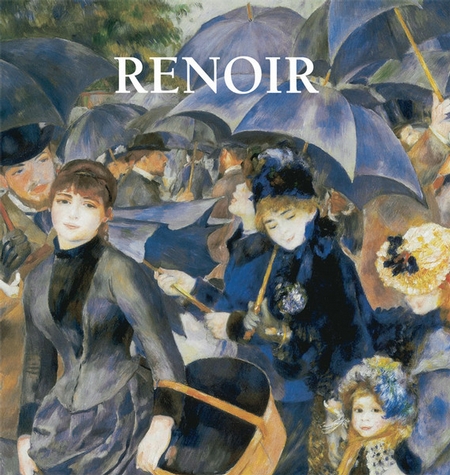
Pierre-Auguste Renoir was born in Limoges on 25 February 1841. In 1854, the boy’s parents took him from school and found a place for him in the Lvy brothers’ workshop, where he was to learn to paint porcelain. Renoir’s younger brother Edmond had this to say this about the move: “From what he drew in charcoal on the walls, they concluded that he had the ability for an artist’s profession. That was how our parents came to put him to learn the trade of porcelain painter.” One of the Lvys’ workers,...
Pierre-Auguste Renoir was born in Limoges on 25 February 1841. In 1854, the boy’s parents took him from school and found a place for him in the Lvy brothers’ workshop, where he was to learn to paint porcelain. Renoir’s younger brother Edmond had this to say this about the move: “From what he drew in charcoal on the walls, they concluded that he had the ability for an artist’s profession. That was how our parents came to put him to learn the trade of porcelain painter.” One of the Lvys’ workers, Emile Laporte, painted in oils in his spare time. He suggested Renoir makes use of his canvases and paints. This offer resulted in the appearance of the first painting by the future impressionist. In 1862 Renoir passed the examinations and entered the Ecole des Beaux-Arts and, simultaneously, one of the independent studios, where instruction was given by Charles Gleyre, a professor at the Ecole des Beaux-Arts. The second, perhaps even the first, great event of this period in Renoir’s life was his meeting, in Gleyre’s studio, with those who were to become his best friends for the rest of his days and who shared his ideas about art. Much later, when he was already a mature artist, Renoir had the opportunity to see works by Rembrandt in Holland, Velzquez, Goya and El Greco in Spain, and Raphael in Italy. However, Renoir lived and breathed ideas of a new kind of art. He always found his inspirations in the Louvre. “For me, in the Gleyre era, the Louvre was Delacroix,” he confessed to Jean. For Renoir, the First Impressionist Exhibition was the moment his vision of art and the artist was affirmed. This period in Renoir’s life was marked by one further significant event. In 1873 he moved to Montmartre, to the house at 35 Rue Saint-Georges, where he lived until 1884. Renoir remained loyal to Montmartre for the rest of his life. Here he found his “plein-air” subjects, his models and even his family. It was in the 1870s that Renoir acquired the friends who would stay with him for the remainder of his days. One of them was the art-dealer Paul Durand-Ruel, who began to buy his paintings in 1872. In summer, Renoir continued to paint a great deal outdoors together with Monet. He would travel out to Argenteuil, where Monet rented a house for his family. Edouard Manet sometimes worked with them too. In 1877, at the Third Impressionist Exhibition, Renoir presented a panorama of over twenty paintings. They included landscapes created in Paris, on the Seine, outside the city and in Claude Monet’s garden; studies of women’s heads and bouquets of flowers; portraits of Sisley, the actress Jeanne Samary, the writer Alphonse Daudet and the politician Spuller; and also The Swing and The Ball at the Moulin de la Galette. Finally, in the 1880s Renoir hit a “winning streak”. He was commissioned by rich financiers, the owner of the Grands Magasins du Louvre and Senator Goujon. His paintings were exhibited in London and Brussels, as well as at the Seventh International Exhibition held at Georges Petit’s in Paris in 1886. In a letter to Durand-Ruel, then in New York, Renoir wrote: “The Petit exhibition has opened and is not doing badly, so they say. After all, it’s so hard to judge about yourself. I think I have managed to take a step forward towards public respect. A small step, but even that is something.”
Психологический роман о скрытой силе, что есть внутри каждого и с которой не так просто справиться, когда ее вдруг осознаешь Новый роман автора, пробующего себя в новом жанре — драме о молодых взрослых. Но будет так же кинематографично, как в «Холодных глазах», иронично, как в «Большой Суете», и о семейных ценностях, как в «Типа я» Автор — лауреат литературной премии «Лицей», финалист премии...
Издательство:
Альпина Паблишер
Дата выхода: ноябрь 2025
Эта книга, написанная Эриком Клайном, археологом с более чем 30-сезонным опытом раскопок, прослеживает историю археологии от любительских занятий до сегодняшнего дня, когда она стала передовой наукой. Автор знакомит читателя с основными археологическими памятниками и открытиями, а еще очень интересно отвечает на вопросы, которые чаще всего задают археологам: Как вы узнаете, где копать? Как на самом деле...
Автор этой книги — Крэйг Эштон, более 15 лет назад сбежавший из родного туманного Манчестера в солнечный Санкт-Петербург. До своего побега он знал, что в России все едят суп из капусты и картошки, по Красной площади ежедневно ездят танки и люди на улицах улыбаются лишь в свой день рождения. Но попав в город на Неве, он влюбился то ли в корюшку, то ли в русскую баню, то ли в УФМС, то ли в Масяню, то ли в «Осторожно,...
В глубине Уральских гор – самых древних в мире – спрятано множество сокровищ. Это не только яркие и ценные самоцветы, но и удивительные истории, в которых сочетаются предания и быль. Собрал и записал их Павел Петрович Бажов, великий уральский сказитель и фольклорист, а Маша Лукашкина в своем пересказе бережно передала богатство и певучесть народного языка. Уникальные и самобытные иллюстрации Антейку,...
Даже опытный инвестор, у которого за плечами сотни часов напряженных торгов и множество успешных сделок, может столкнуться с серьезными финансовыми потерями из-за непродуманных решений. В своей книге признанный эксперт в области инвестиций Баладжи Касал подробно анализирует ошибки, допущенные легендарным инвестором Уорреном Баффеттом. На материале писем Баффетта, его интервью...
Издательство:
Альпина Паблишер
Дата выхода: апрель 2025
Мы живем по правилам, построенным на традиционных ожиданиях общества, таких как поступление в университет, нахождение хорошей работы и создание семьи. Ха Ван задается вопросом, кто установил эти «правила» и нужно ли следовать им, чтобы жизнь считалась успешной. Понимая, что гнался за этой идеальной жизнью, он решил остановиться и переосмыслить свой путь. Он бросил работу и начал искать ответы на основные...
Оставить комментарий