Michelangelo, like Leonardo, was a man of many talents; sculptor, architect, painter and poet, he made the apotheosis of muscular movement, which to him was the physical manifestation of passion. He moulded his draughtsmanship, bent it, twisted it, and stretched it to the extreme limits of possibility. There are not any landscapes in Michelangelo\'s painting. All the emotions, all the passions, all the thoughts of humanity were personified in his eyes in the naked bodies of men and women. He...
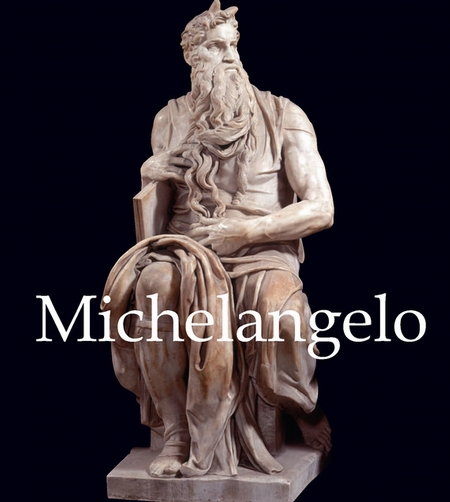
Michelangelo, like Leonardo, was a man of many talents; sculptor, architect, painter and poet, he made the apotheosis of muscular movement, which to him was the physical manifestation of passion. He moulded his draughtsmanship, bent it, twisted it, and stretched it to the extreme limits of possibility. There are not any landscapes in Michelangelo\'s painting. All the emotions, all the passions, all the thoughts of humanity were personified in his eyes in the naked bodies of men and women. He rarely conceived his human forms in attitudes of immobility or repose. Michelangelo became a painter so that he could express in a more malleable material what his titanesque soul felt, what his sculptor\'s imagination saw, but what sculpture refused him. Thus this admirable sculptor became the creator, at the Vatican, of the most lyrical and epic decoration ever seen: the Sistine Chapel. The profusion of his invention is spread over this vast area of over 900 square metres. There are 343 principal figures of prodigious variety of expression, many of colossal size, and in addition a great number of subsidiary ones introduced for decorative effect. The creator of this vast scheme was only thirty-four when he began his work. Michelangelo compels us to enlarge our conception of what is beautiful. To the Greeks it was physical perfection; but Michelangelo cared little for physical beauty, except in a few instances, such as his painting of Adam on the Sistine ceiling, and his sculptures of the Piet. Though a master of anatomy and of the laws of composition, he dared to disregard both if it were necessary to express his concept: to exaggerate the muscles of his figures, and even put them in positions the human body could not naturally assume. In his later painting, The Last Judgment on the end wall of the Sistine, he poured out his soul like a torrent. Michelangelo was the first to make the human form express a variety of emotions. In his hands emotion became an instrument upon which he played, extracting themes and harmonies of infinite variety. His figures carry our imagination far beyond the personal meaning of the names attached to them.
Иллюстрации (40): П. Ю. Перевезенцев Подготовка текста и комментарии: А. Г. Мец Статьи: А. Г. Мец и П. М. Нерлер В книге представлено поэтическое наследие Осипа Эмильевича Мандельштама (1893—1938) последнего периода (1930—1938) его творчества, главное место в котором занимают его знаменитые «Воронежские тетради». Мандельштам с женой приехали в Воронеж в июне 1934 года не на отдых и не в творческую командировку — в...
Послесловие: С. Я. Серов Комментарии: А. Н. Нечаев Иллюстрации (48): И. Ю. Олейников В творчестве замечательного русского писателя Алексея Николаевича Толстого (1883-1945) особое место занимают сказки. Толстой, с юных лет увлекавшийся народными верованиями и обычаями, серьезно изучавший фольклор, как немногие чувствовал живой русский язык, отличался вниманием и любовью к слову. В основу настоящего издания...
В последние месяцы гражданской войны в Испании республиканские войска отступают к французской границе. В числе пленных, приговоренных к расстрелу, оказывается Рафаэль Санчес Масас — основатель и идеолог Фаланги, один из виновников этого братоубийственного конфликта. Санчес Масас чудом избегает смерти: безымянный республиканец решает пощадить его. Историю спасения Масаса пытается восстановить...
Издательство:
Издательство Ивана Лимбаха
Дата выхода: сентябрь 2025
«Эта замечательная книга поможет читателю ознакомиться с основными концепциями и достижениями в области глубокого обучения, лежащими в основе современных промышленных систем искусственного интеллекта. Вероятно, на них будут опираться и дальнейшие разработки в области ИИ». Иошуа Бенджио, ведущий эксперт в области ИИ, лауреат премии Тьюринга (2018) Книга предлагает исчерпывающее описание...
Перед вами — точная копия легендарного смирдинского издания, вышедшего при жизни Александра Сергеевича Пушкина в Санкт-Петербурге в типографии Александра Смирдина. Это факсимиле — полистная репродукция оригинала, максимально приближенная к историческому источнику.
Проектирование и развертывание системы машинного обучения — это сложный многоэтапный процесс, требующий разнообразных компетенций и участия специалистов разных ролей. Независимо от того, интегрируете ли вы ML в существующий проект или проектируете ML-систему с нуля, вам необходимо ориентироваться в огромных датасетах и потоках, определять требования к тестированию и развертыванию, а также учитывать...
Двор (книга третья) - долгожданное продолжение классической эпопеи Аркадия Львова. Это роман о жизни одного одесского двора в разные времена истории страны. В третьей части описываются хрущевские годы.
ISBN: 5-8159-0477-5
Издательство:
Захаров
Дата выхода: апрель 2005
Оставить комментарий