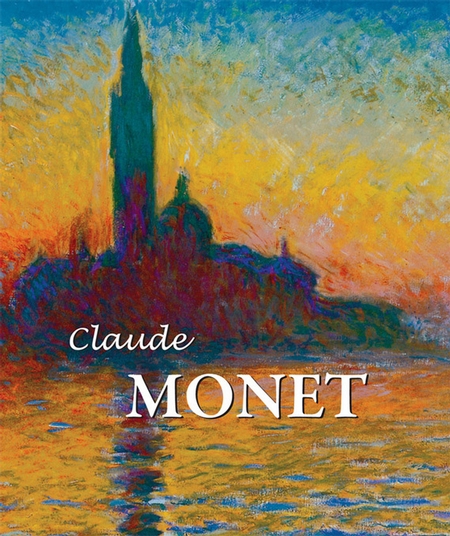
For Claude Monet the designation ‘impressionist’ always remained a source of pride. In spite of all the things critics have written about his work, Monet continued to be a true impressionist to the end of his very long life. He was so by deep conviction, and for his Impressionism he may have sacrificed many other opportunities that his enormous talent held out to him. Monet did not paint classical compositions with figures, and he did not become a portraitist, although his professional training...
For Claude Monet the designation ‘impressionist’ always remained a source of pride. In spite of all the things critics have written about his work, Monet continued to be a true impressionist to the end of his very long life. He was so by deep conviction, and for his Impressionism he may have sacrificed many other opportunities that his enormous talent held out to him. Monet did not paint classical compositions with figures, and he did not become a portraitist, although his professional training included those skills. He chose a single genre for himself, landscape painting, and in that he achieved a degree of perfection none of his contemporaries managed to attain. Yet the little boy began by drawing caricatures. Boudin advised Monet to stop doing caricatures and to take up landscapes instead. The sea, the sky, animals, people, and trees are beautiful in the exact state in which nature created them – surrounded by air and light. Indeed, it was Boudin who passed on to Monet his conviction of the importance of working in the open air, which Monet would in turn transmit to his impressionist friends. Monet did not want to enrol at the Ecole des Beaux-Arts. He chose to attend a private school, L’Acadmie Suisse, established by an ex-model on the Quai d’Orfvres near the Pont Saint-Michel. One could draw and paint from a live model there for a modest fee. This was where Monet met the future impressionist Camille Pissarro. Later in Gleyre’s studio, Monet met Auguste Renoir Alfred Sisley, and Frdric Bazille. Monet considered it very important that Boudin be introduced to his new friends. He also told his friends of another painter he had found in Normandy. This was the remarkable Dutchman Jongkind. His landscapes were saturated with colour, and their sincerity, at times even their navet, was combined with subtle observation of the Normandy shore’s variable nature. At this time Monet’s landscapes were not yet characterized by great richness of colour. Rather, they recalled the tonalities of paintings by the Barbizon artists, and Boudin’s seascapes. He composed a range of colour based on yellow-brown or blue-grey. At the Third Impressionist Exhibition in 1877 Monet presented a series of paintings for the first time: seven views of the Saint-Lazare train station. He selected them from among twelve he had painted at the station. This motif in Monet’s work is in line not only with Manet’s Chemin de fer (The Railway) and with his own landscapes featuring trains and stations at Argenteuil, but also with a trend that surfaced after the railways first began to appear. In 1883, Monet had bought a house in the village of Giverny, near the little town of Vernon. At Giverny, series painting became one of his chief working procedures. Meadows became his permanent workplace. When a journalist, who had come from Vtheuil to interview Monet, asked him where his studio was, the painter answered, “My studio! I’ve never had a studio, and I can’t see why one would lock oneself up in a room. To draw, yes – to paint, no”. Then, broadly gesturing towards the Seine, the hills, and the silhouette of the little town, he declared, “There’s my real studio.”Monet began to go to London in the last decade of the nineteenth century. He began all his London paintings working directly from nature, but completed many of them afterwards, at Giverny. The series formed an indivisible whole, and the painter had to work on all his canvases at one time. A friend of Monet’s, the writer Octave Mirbeau, wrote that he had accomplished a miracle. With the help of colours he had succeeded in recreating on the canvas something almost impossible to capture: he was reproducing sunlight, enriching it with an infinite number of reflections. Alone among the impressionists, Claude Monet took an almost scientific study of the possibilities of colour to its limits; it is unlikely that one could have gone any further in that direction.
Одной морозной бездонной ночью начала XX века в маленьком таежном поселке хантыйских охотников послышался медный звон колокольчиков. Это свадебный караван из оленьих упряжек передвигался по едва заметным тропинкам от избы к избе. Но в какой двор он завернет? Погонщик же уверенно остановился у дома старика Епим ики. Здесь еще в прошлом году гостям обещали отдать в жены любую из его дочерей. Вот только отец...
Кира Скайфолл всю жизнь готовилась к этому моменту. Смелая фениксидка с белыми крыльями, закаленная тренировками, но почти лишенная магии, она отправляется в гарнизон драконитов, которых училась ненавидеть с рождения. Два враждующих клана вынуждены объединить силы против общей угрозы — неведомых монстров, появляющихся из-под земли. В гарнизоне Кира сталкивается с Шеду — мрачным и немногословным...
Издательство:
Альпина Паблишер
Дата выхода: ноябрь 2025
Нет места более священного, чем Иерусалим – "ликующий вопль тысяч и тысяч глоток", "неистовый жар молитв, жалоб и клятв", "тугая котомка" запахов: ладана – христианского квартала, рыбы – мусульманского, свежестиранного белья – еврейского, хлебного – армянского. Жить в этом городе непросто, потому что он, по словам Дины Рубиной, – "вершина трагедии". Но что было бы в жизни писателя, если бы в ней не случился...
Тея Кронборг обладает невероятным талантом и прекрасным голосом, но для того, чтобы девочке из бедного городка в Колорадо стать великой оперной певицей, голоса и таланта недостаточно. Цепочка случайных встреч — с сельским доктором, простым скитальцем, обедневшим учителем музыки — открывает для Теи дорогу к славе, но на этом пути ей придется пожертвовать многим, в том числе и частицей своей души. «Песня...
В этом романе Александра Маринина остаётся верна себе — точная психология, острое социальное чутьё и цепкий детективный нерв. Однако автор впервые вплетает в повествование сюжетную линию из будущего. Благодаря этому можно взглянуть на преступление так, как его увидят через десятки лет, когда правда уже никому не нужна. *** 2024 год. Двойная трагедия в Москве: убита молодая женщина, автор популярного...
«Нам уже пора» — сборник коротких историй про странную, деконструированную реальность, в которой мы застряли, будто в лимбе. Пожилая кошатница забывает человеческую речь, дворник пришел из другого мира спасти нас, гость тайского салона подозревает, что массажистка — древняя богиня... Героев проще всего назвать городскими сумасшедшими, но что, если пленка, отделяющая реальное от иллюзорного, слишком...
Прыг! Скок! Кенгуру Малу прыгает выше всех! Но что случилось? Назойливая серая тучка прилипла и испортила все прыжки. Хорошо, что друзья всегда придут на помощь! Ни один кенгуру не может прыгать так, как Малу, — быстро, высоко и энергично. Раз-два-три, и все уже далеко позади! Но однажды он просыпается, не способный сделать ни прыжочка, а над его головой повисает серое облако. Что же делать?...
ISBN: 978-5-6044250-3-9
Издательство:
Поляндрия
Дата выхода: март 2020
Оставить комментарий